Fuselage or Tail Mount? Choosing the Right Gogo Galileo Configuration for Your Airframe
September 28, 2026
When choosing a global Low Earth Orbit (LEO) satellite broadband solution, network speed and low latency are only half the equation. For flight departments, aircraft owners, and MRO facilities, the physical installation on the airframe is just as vital.
Every business aircraft has unique aerodynamic profiles, structural considerations, and design lines. That is why Gogo engineered the Gogo Galileo antenna system with the flexibility to match your mission.
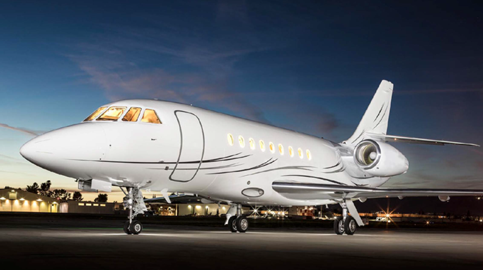
While fuselage mounting provides an aerodynamically refined, versatile solution across the wider fleet, certain high-performance airframes, such as the Gulfstream 650/ER, Falcon 2000/7X/8X, and Citation X/X+, benefit from an alternative configuration. For operators and MRO facilities seeking to preserve factory exterior profiles, utilize pre-existing antenna locations, and maintain clean aerodynamic lines, an under-the-radome installation provides an ideal pathway.
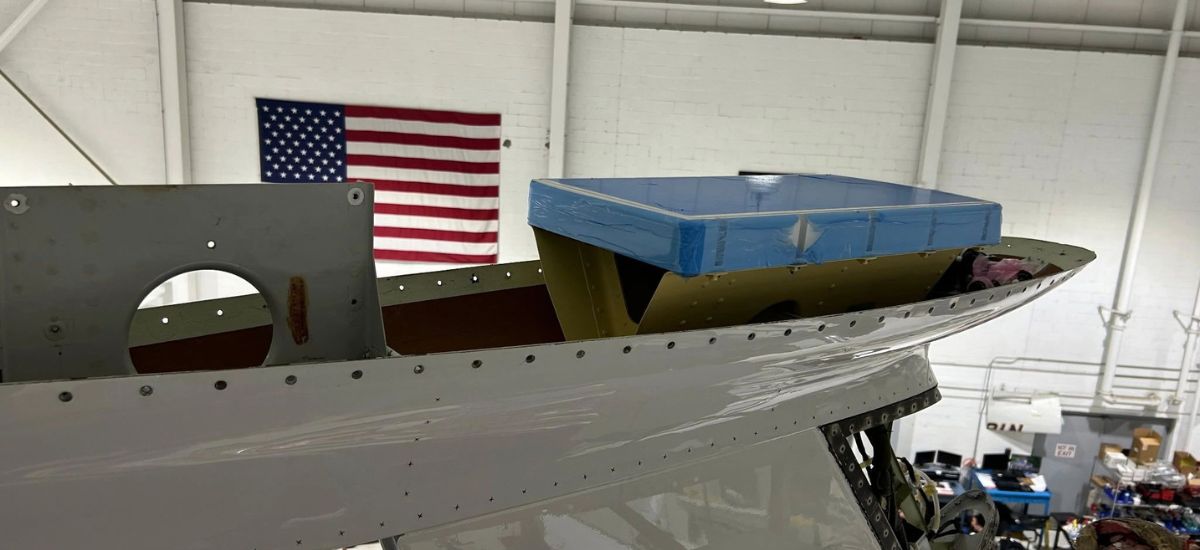
To address these unique requirements, Gogo has worked closely with OEM and STC partners to engineer Galileo Tail-Mounted Antenna (TMA) configurations within existing vertical stabilizer radome bays originally provisioned for GEO satellite equipment. These deliver operational and engineering benefits:
- Protects Factory Configuration:
Houses the antenna fully inside an existing OEM radome cavity, maintaining the airframe’s original external baseline and baseline aerodynamic parameters - ensuring high-speed cruise performance and fuel burn characteristics remain unchanged. - Paint Scheme Preservation:
Integrates completely within existing structure, leaving the aircraft's exterior paint design, markings, and crown surface untouched. - Utilization of Existing Provisions: Installers make full use of structural mounting points, power feeds, and cable conduits previously installed for legacy satcom systems, accelerating installation workflows.
- Minimized Cabin Interior Disturbance: Cabling runs remain predominantly within the unpressurized empennage and designated electronics bays, significantly reducing the need to remove cabin headliners, side panels, or bespoke interior furnishings during installation.
- Protected Operating Environment: Housing the terminal underneath a composite radome shelters critical RF and steering components from direct external weathering, environmental exposure, and de-icing fluid impingement.
Flexible Cabin Network Architecture
Whether your aircraft flies with a standard fuselage-mounted antenna or a dedicated tail-mounted radome installation, integrating Gogo Galileo into your onboard cabin network is straightforward and flexible.
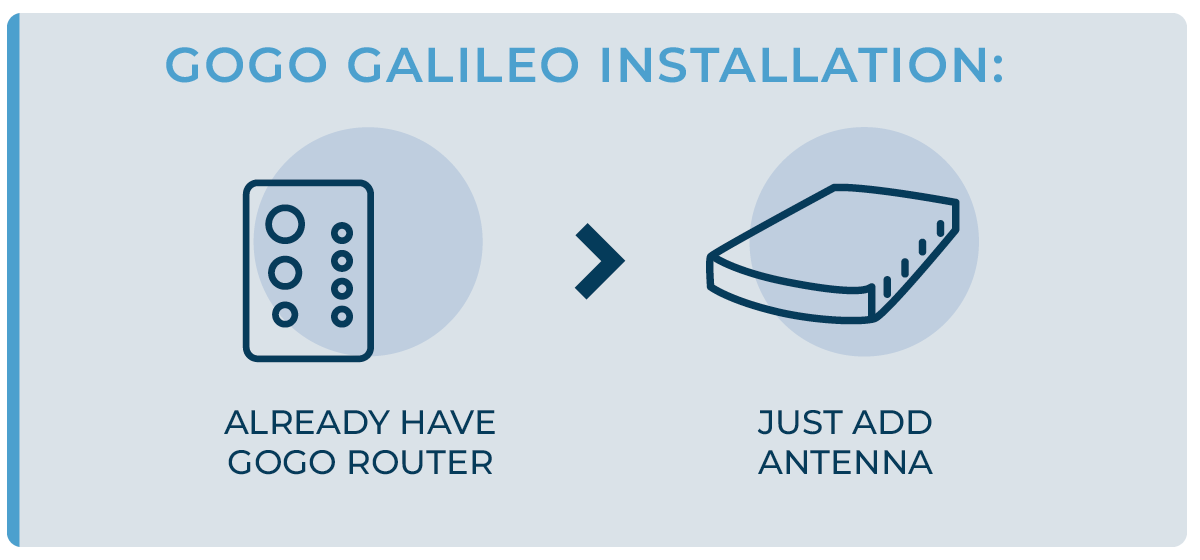
For aircraft flying with a Gogo router, adding Gogo Galileo requires only the antenna and its dedicated power supply unit. Your existing AVANCE cabin routing, smart-cabin features, and multi-bearer network management remain completely intact.
Ready to Explore Your Options?
Choosing between a standard fuselage mount and a tail-mounted radome configuration comes down to your airframe, your mission, and your upcoming maintenance cycle. Gogo’s connectivity specialists and certified dealer network are here to help you evaluate Supplemental Type Certificates (STCs), review installation timelines, and plan your upgrade.